The Arena, the Intensity and My $20 Bet
To understand where fitness racing might be heading, I believe you need two ingredients:
The Arena — The Gym.
The Intensity — The Practical Solution.
The growth of HYROX has entered the mainstream fitness world like a steam train.
But perhaps it was CrossFit, under its founder Greg Glassman, that first got that steam train moving.
And now, with HYROX arenas bursting with competitors, I believe that train has arrived at an important station.
The passengers are getting off.
But here’s the interesting thing.
They’re hooked. They want more.
There have only been so many stops along this journey. The major arenas have provided extraordinary experiences, and HYROX has absolutely nailed that model.
My God, has it nailed it!
But what happens next?
What happens when thousands of competitors want to race again, without waiting for another major event, travelling across the country or entering another enormous arena?
Where does the train go from here?
The Problem Is Also the Opportunity
For me, the answer is relatively simple.
The next arena is the gym itself.

But there is a problem.
A competition designed to take an individual around an hour or more to complete in a major arena cannot necessarily be transferred into an ordinary commercial gym without significant changes.
The space is different. The equipment availability is different. The logistics are different.
And most importantly, the duration needs to be different.
My prediction is that the practical solution will be to shorten the duration and increase the intensity.
Short, sharp and exciting.
A race that challenges muscular endurance, cardiovascular fitness and mental determination within minutes rather than an hour.
And one that can be repeated, measured and compared.
Think About Gladiators
Let me take you back to the television show Gladiators.
Think about the drama of its final obstacle course, The Eliminator.
A relatively short period of extraordinary physical effort.
The competitors are exhausted. Their hearts are pounding. Every second matters.
And the audience is completely absorbed.
That’s the magic.
You don’t necessarily need an hour to create sporting drama.
Sometimes two minutes can deliver an extraordinary spectacle.
At very high intensities, the body relies heavily on its anaerobic energy systems alongside its aerobic capacity. Muscular fatigue, cardiovascular demand and the ability to maintain performance all become critical.
Now imagine translating that excitement into a structured gym challenge.
Several stations testing different aspects of fitness.
Running, rowing, cycling, lifting and carrying.
A final effort on the treadmill.
The clock ticking.
The competitor pushing towards the finish.
That’s intensity. That’s drama. And that can happen inside a gym.

An Arena in the Gym You Train At
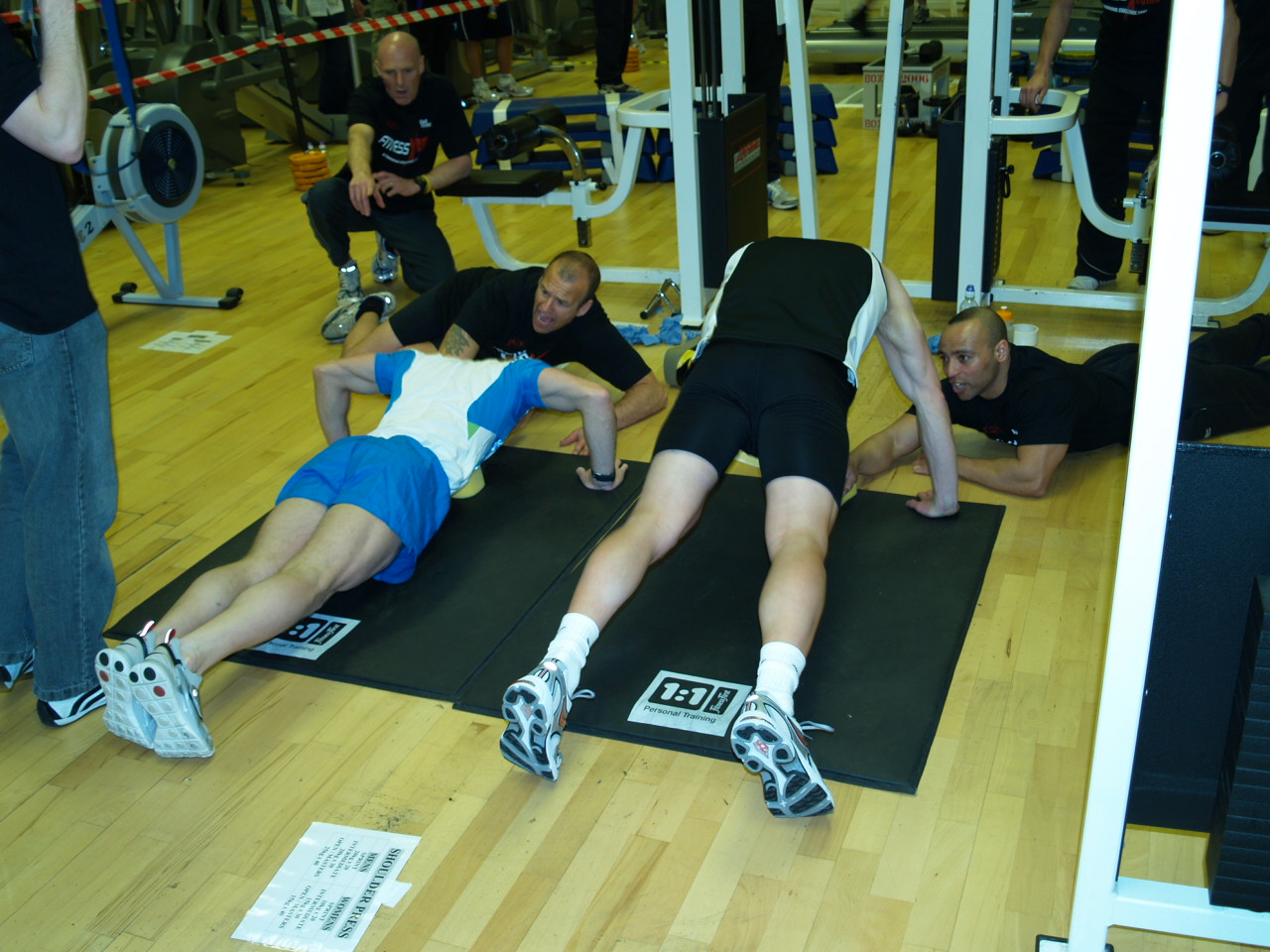
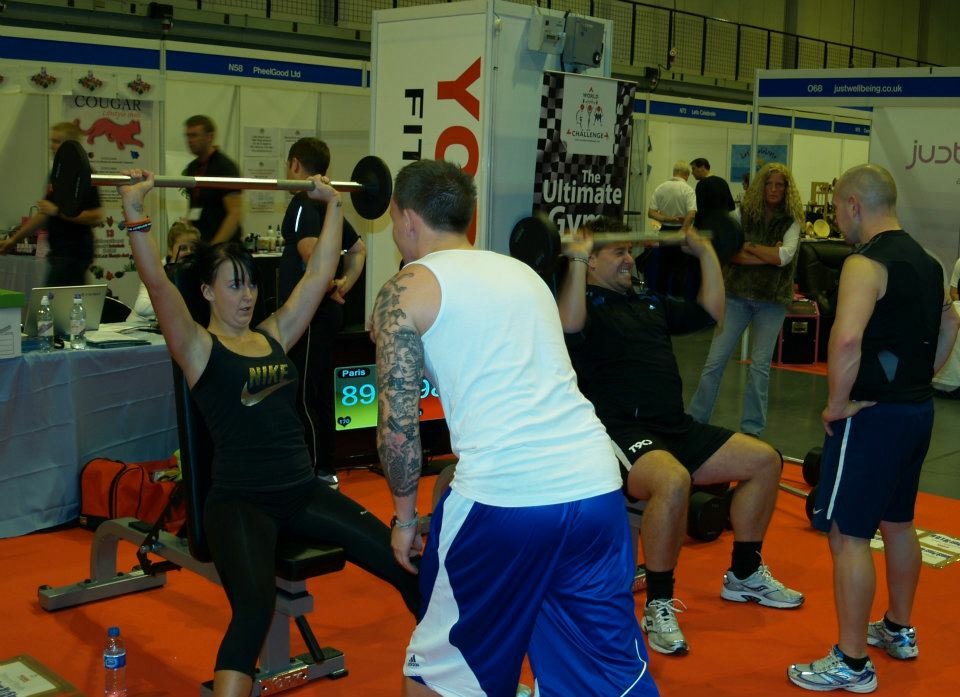
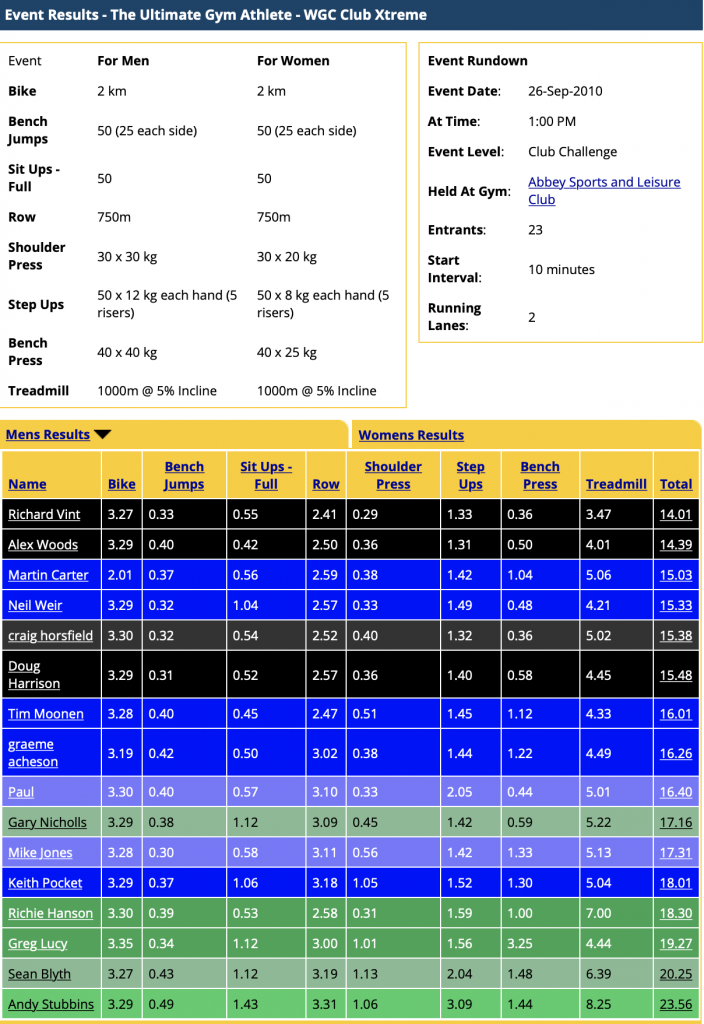
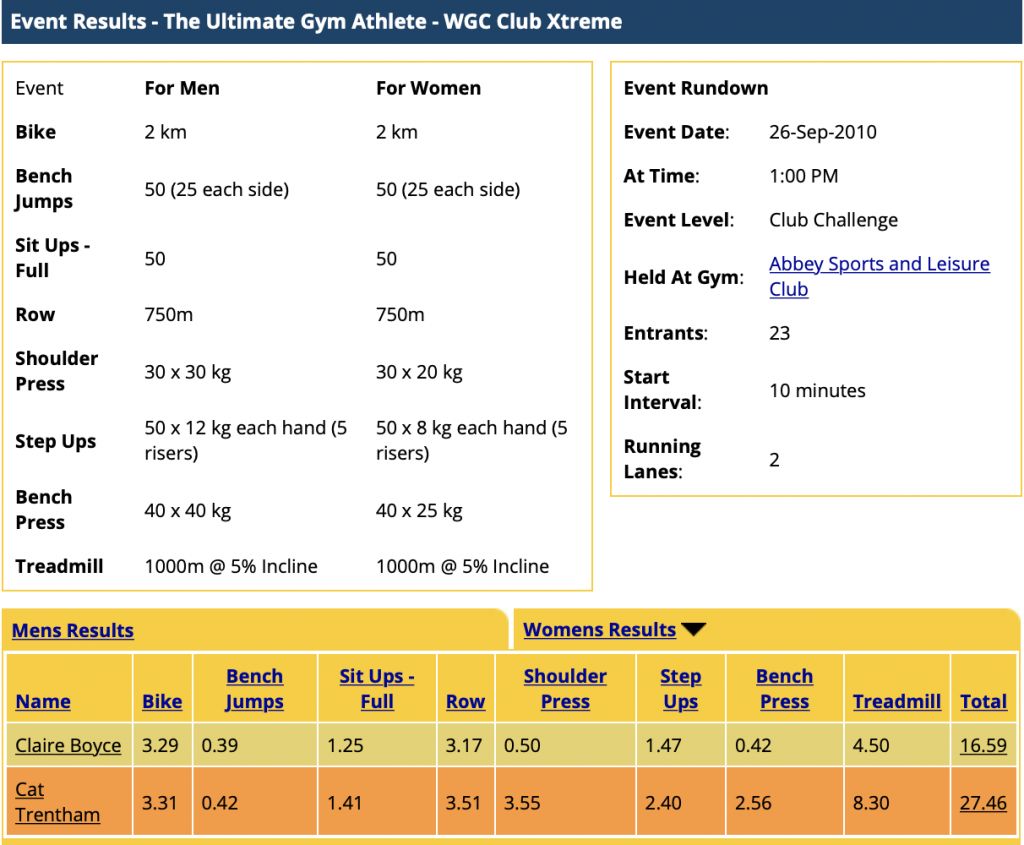
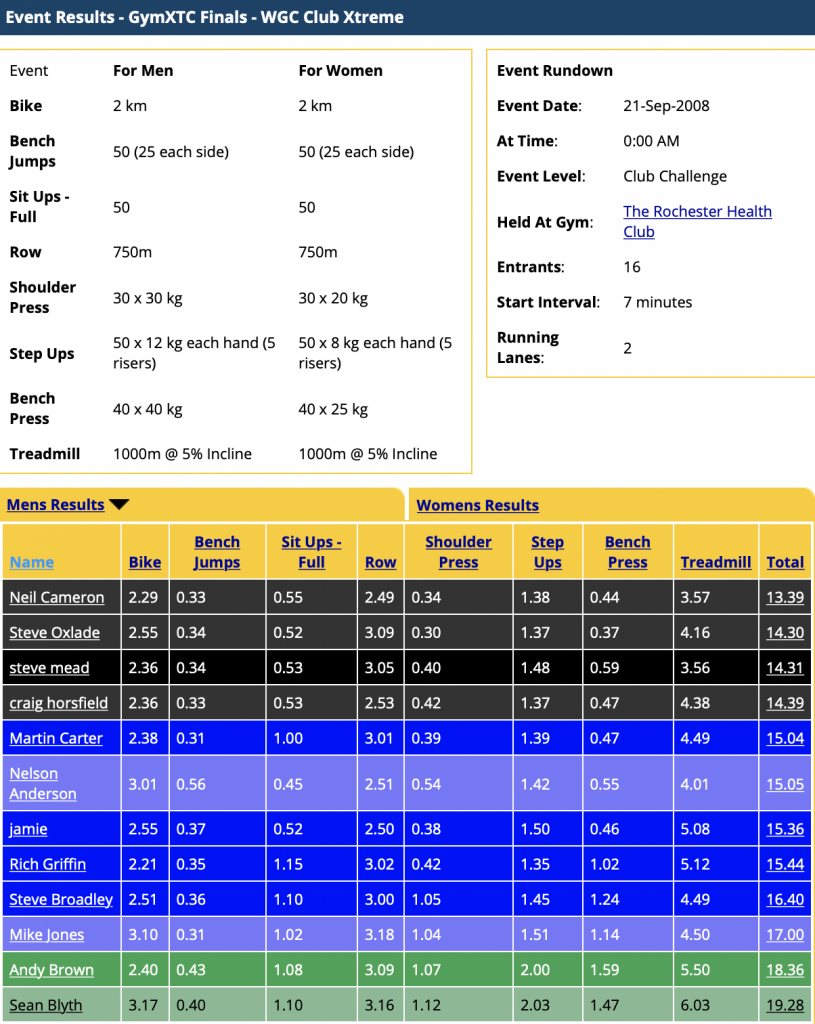
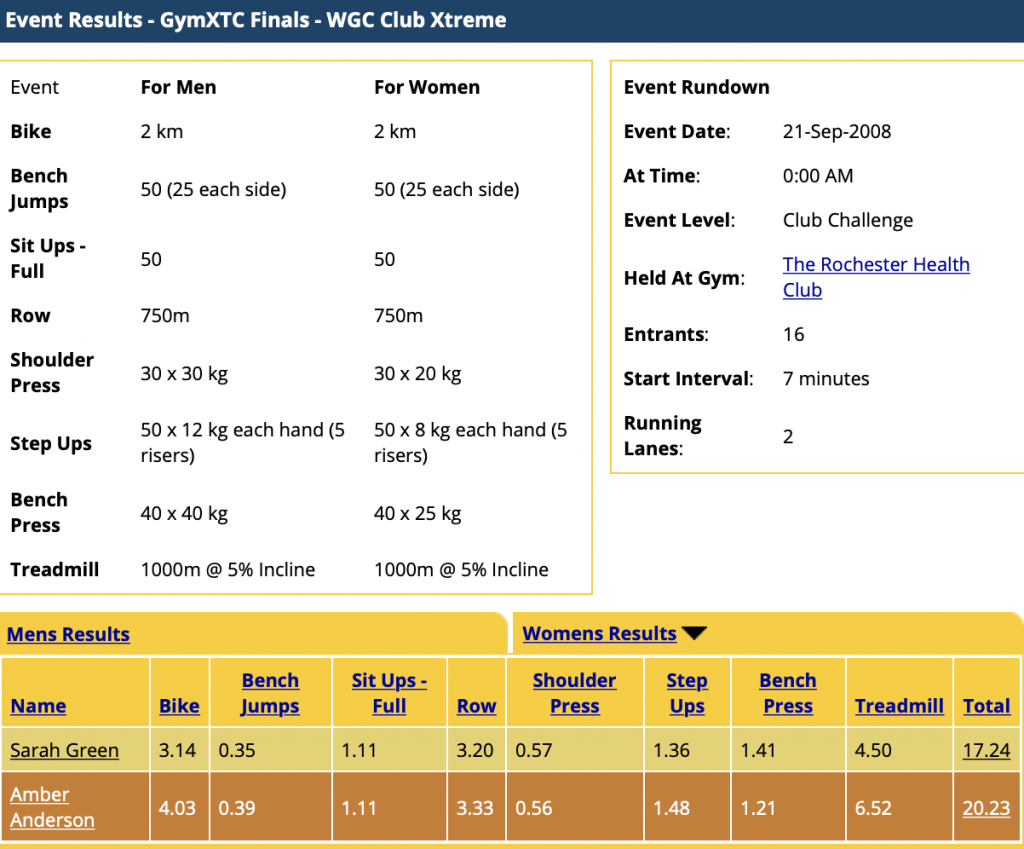
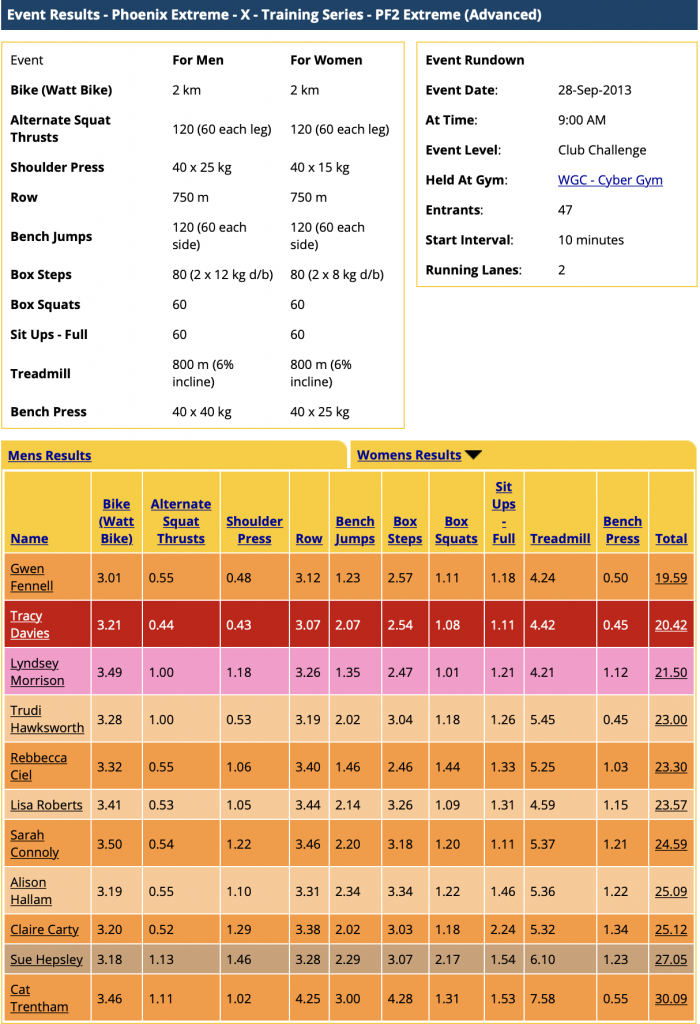
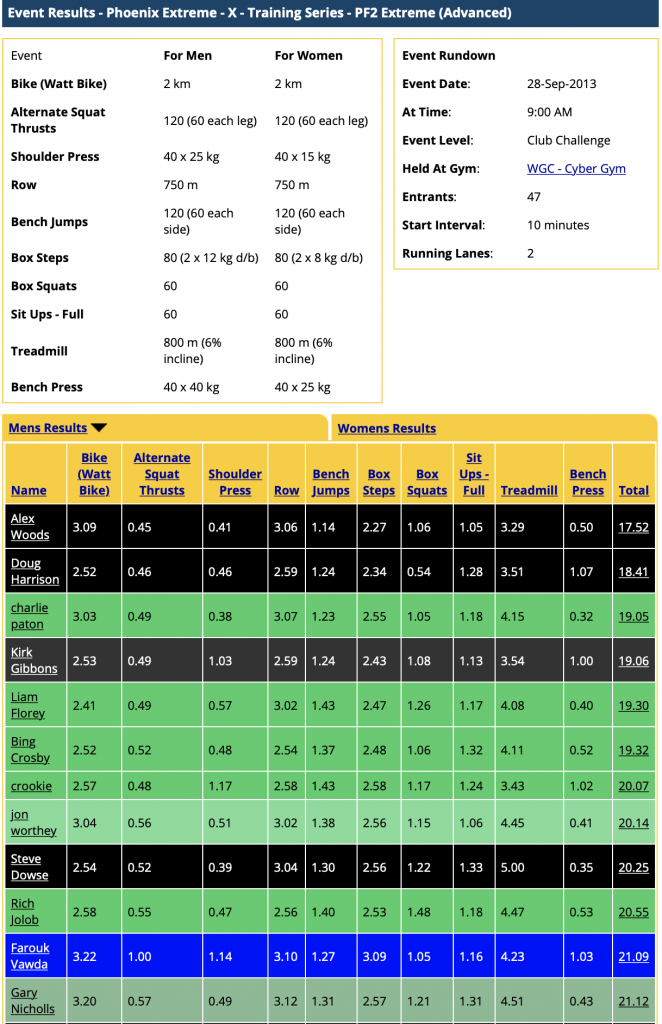
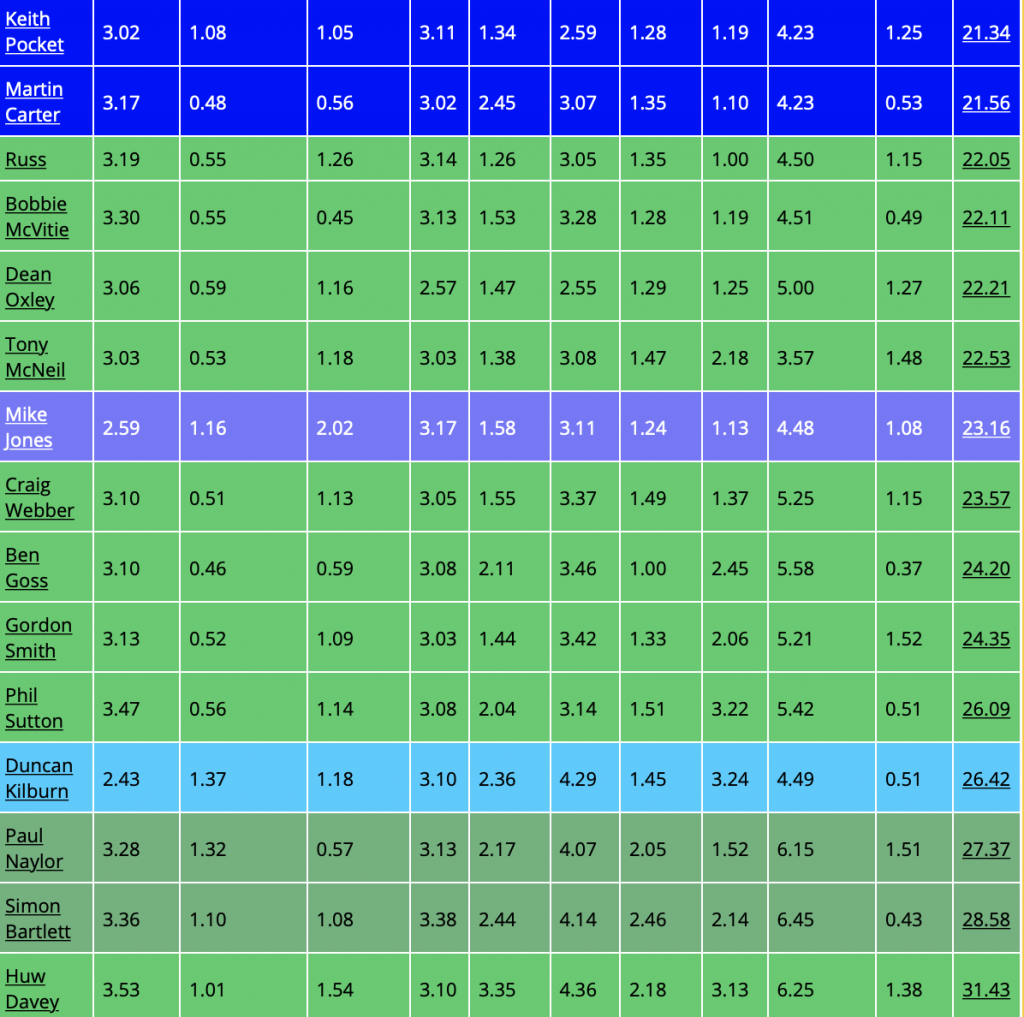
Since 2006, World Gym Challenge has explored precisely this principle.
A gym challenge held within the environment where people already train.
The original concept was built around practicality, intensity, timed performance and the ability to compare results.
It wasn’t necessary to hire a stadium.
The gym was already the arena.
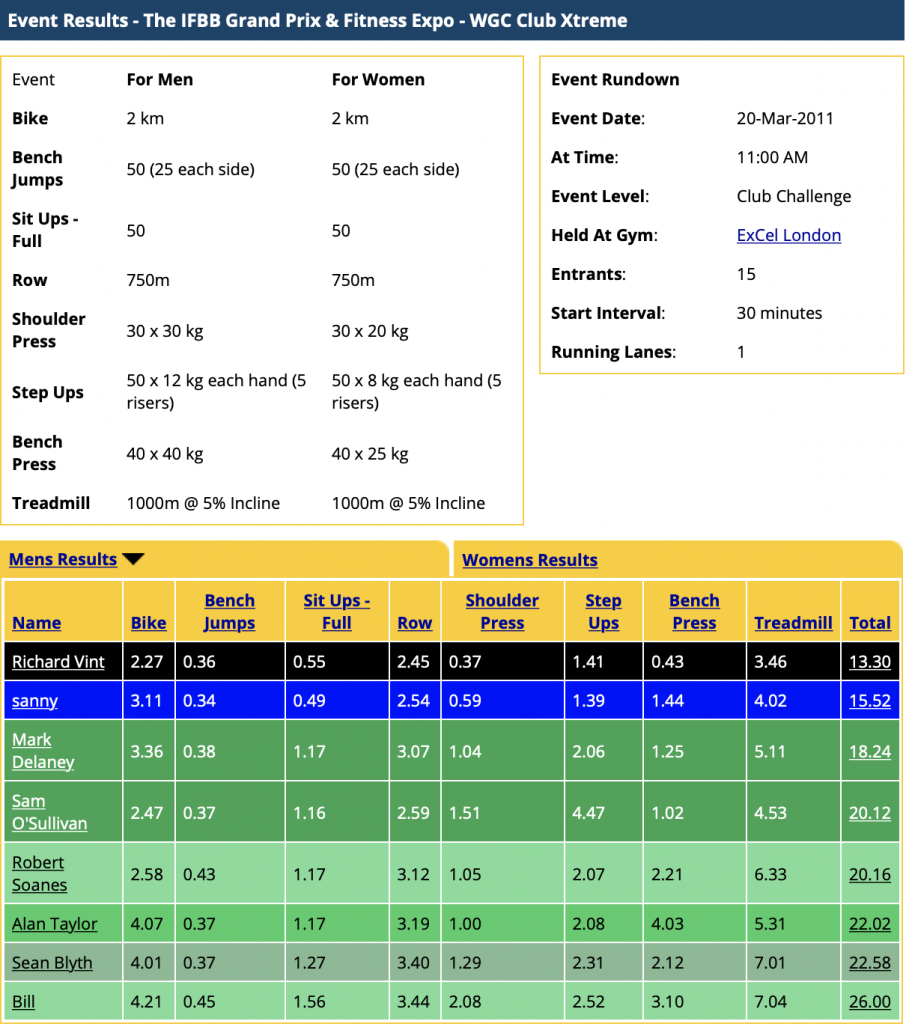
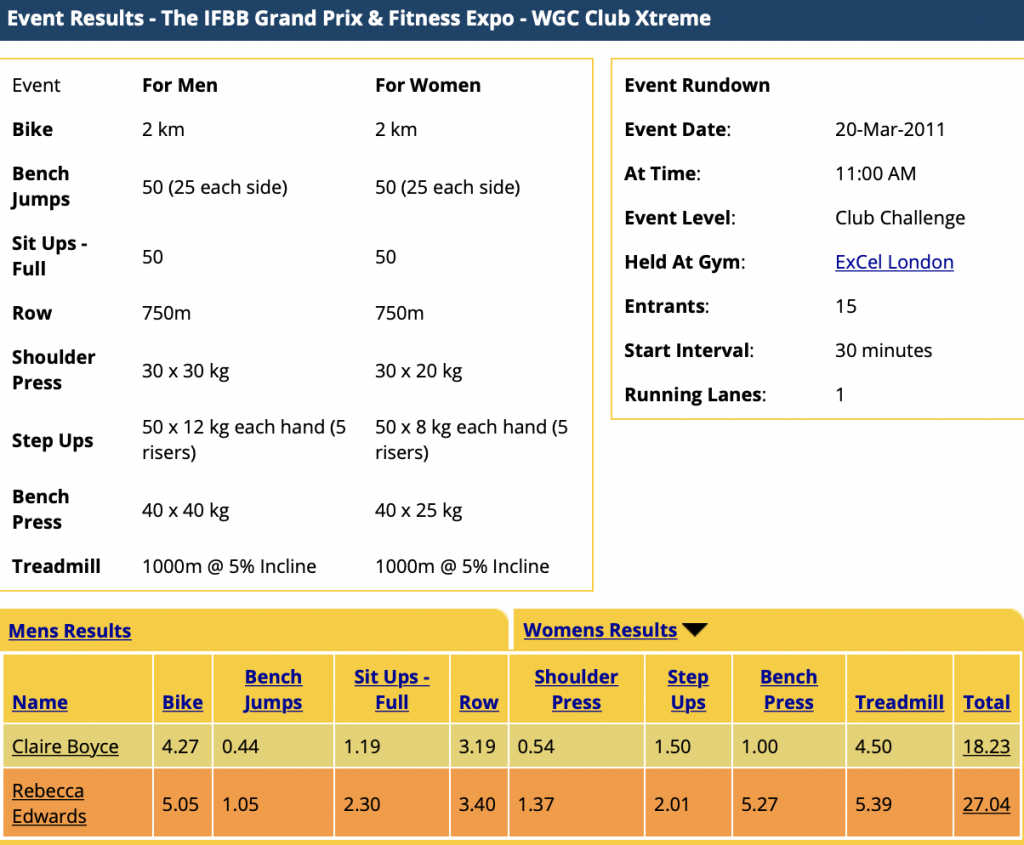
Over the years, World Gym Challenge developed competition formats using multiple exercise stations, classifications and recorded results.
The principle was straightforward.
Create a challenge that could be completed within a gym, measured against the clock and compared with other competitors.
The competitor didn’t need to travel to a major event to experience competitive fitness.
The challenge could come to them.
This Isn’t Just Another Workout of the Day
CrossFit established the Workout of the Day, or WOD, as an enormously influential part of functional fitness.
But what I’m describing is something different.
I’m talking about a standardised racing format.
A recognised sequence of exercises.
Consistent distances, repetitions and equipment standards.
A stopwatch.
Verified results.
And the opportunity to compare performances between competitors, gyms and potentially countries.
The challenge must be repeatable.
The result must mean something.
And the competition must be practical enough to take place in an ordinary gym.
So Where Does HYROX Go Next?
If HYROX intends to expand competitive racing further into everyday gyms, I believe it will need to consider how its racing format fits that environment.
Perhaps shorter distances.
Perhaps fewer stations.
Perhaps significantly shorter race durations.
And perhaps a completely different approach to intensity.
I may be wrong.
HYROX may have another plan entirely.
But I believe the demand for more accessible, frequent competition is going to become increasingly important.
Those passengers who experienced the excitement of the arena will want to race again.
And again.
And again.
Imagine being able to complete a recognised fitness race at your own gym, with your performance recorded and compared against others.
No major travel arrangements.
No enormous arena.
Just the competitor, the equipment, the clock and the challenge.
My $20 Bet
I’ve experienced this form of racing myself.
I’ve competed in it, helped develop it and witnessed what happens when ordinary gym members discover the intensity of racing against the clock.
And that’s why I’m prepared to make this forecast.
The future of fitness racing won’t be confined to major arenas.
The next significant opportunity may be shorter, more intense, standardised races held inside the gyms where people already train.
The big arenas will remain. They’ve earned their place.
But the passengers need somewhere else to go between those major events.
And perhaps the next destination has been sitting in front of us all along.
The Gym.
That’s my $20 bet.
Am I wrong?
World Gym Challenge — Sport for Gyms since 2006.